
From healthcare and finance to e-commerce and media, organizations leverage topic modeling to understand customer preferences, uncover trends, and make data-driven decisions. In this article, we explore the diverse applications of topic modeling in different industries, showcasing its transformative impact and strategic relevance.
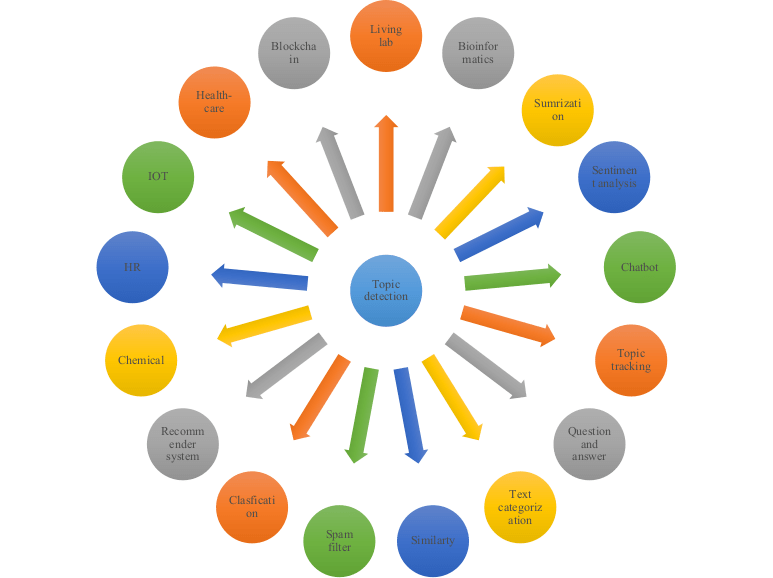
Topic modeling, a powerful technique in natural language processing (NLP), has found widespread applications across various industries, illuminating hidden patterns and extracting valuable insights from textual data.
Healthcare Industry
1. Medical Literature Analysis:
In the healthcare domain, topic modeling is used to analyze vast repositories of medical literature, research papers, and clinical notes. By uncovering latent topics within these documents, researchers gain insights into emerging trends, advancements in medical science, and areas of focus for future research.
2. Disease Detection and Surveillance:
Topic modeling aids in disease detection and surveillance by analyzing textual data from sources such as medical records, social media, and news articles. By identifying topics related to symptoms, outbreaks, and treatment modalities, healthcare organizations can monitor disease trends in real-time and implement timely interventions.
3. Patient Feedback Analysis:
Healthcare providers utilize topic modeling to analyze patient feedback, reviews, and surveys. By identifying prevalent topics and sentiments, hospitals and clinics gain insights into patient experiences, satisfaction levels, and areas for improvement in service delivery.
Financial Services Industry
1. Market Trend Analysis:
In finance, topic modeling is employed to analyze textual data from financial news articles, analyst reports, and social media discussions. By identifying topics related to market trends, company performance, and economic indicators, financial institutions gain insights into investor sentiment and market dynamics.
2. Fraud Detection:
Topic modeling aids in fraud detection by analyzing textual data from financial transactions, customer communications, and regulatory filings. By identifying anomalous topics or patterns indicative of fraudulent activities, banks and financial institutions can detect and prevent fraudulent behavior in real-time.
3. Economic Forecasting:
Economists and policymakers leverage topic modeling to analyze economic texts, government reports, and central bank statements. By identifying key topics related to economic indicators, policy changes, and market sentiment, economists gain insights into future economic trends and make informed policy decisions.
E-commerce and Retail Industry
1. Product Recommendation Systems:
E-commerce platforms utilize topic modeling to power product recommendation systems. By analyzing textual data from customer reviews, product descriptions, and purchase histories, e-commerce companies can recommend relevant products to users based on inferred topics and preferences.
2. Customer Sentiment Analysis:
Topic modeling aids in customer sentiment analysis by analyzing textual data from customer feedback, reviews, and social media interactions. By identifying prevalent topics and sentiments, e-commerce companies gain insights into customer preferences, satisfaction levels, and areas for product improvement.
3. Market Basket Analysis:
Retailers leverage topic modeling to perform market basket analysis and understand purchase patterns. By analyzing textual data from sales receipts and transaction records, retailers can identify co-occurring topics or products and optimize product placement, pricing strategies, and cross-selling opportunities.
Media and Entertainment Industry
1. Content Curation and Personalization:
Media companies utilize topic modeling to curate content and personalize recommendations for users. By analyzing textual data from articles, blogs, and social media posts, media companies can identify trending topics, audience interests, and preferences, and tailor content delivery accordingly.
2. Audience Engagement Analysis:
Topic modeling aids in audience engagement analysis by analyzing textual data from viewer comments, social media interactions, and audience feedback. By identifying prevalent topics and sentiments, media companies gain insights into audience preferences, engagement levels, and content performance.
3. Content Discovery and Trend Forecasting:
Media companies leverage topic modeling to discover new content and forecast emerging trends. By analyzing textual data from news articles, blogs, and social media discussions, media companies can identify emerging topics, breaking news stories, and viral trends, and capitalize on them to attract audiences.
Telecommunications Industry
1. Customer Support and Service Analysis:
Telecommunications companies utilize topic modeling to analyze customer support interactions and service requests. By analyzing textual data from customer inquiries, complaints, and feedback, telecom companies can identify prevalent topics, service issues, and areas for improvement in customer service delivery.
2. Network Performance Monitoring:
Topic modeling aids in network performance monitoring by analyzing textual data from network logs, maintenance reports, and system alerts. By identifying topics related to network outages, service disruptions, and performance issues, telecom companies can proactively address network maintenance and optimization needs.
3. Market Trend Analysis:
Telecommunications companies leverage topic modeling to analyze market trends and competitive intelligence. By analyzing textual data from industry reports, analyst briefings, and news articles, telecom companies can identify emerging topics, regulatory changes, and technological advancements that impact the telecommunications market.
Education and Academic Research
1. Literature Review and Research Discovery:
Researchers and academics utilize topic modeling to conduct literature reviews and discover relevant research papers. By analyzing textual data from academic journals, conference proceedings, and research databases, researchers can identify prevalent topics, key findings, and gaps in existing literature.
2. Student Feedback Analysis:
Educational institutions utilize topic modeling to analyze student feedback and course evaluations. By analyzing textual data from student surveys, feedback forms, and online discussions, educational institutions can identify prevalent topics, student concerns, and areas for improvement in course delivery and curriculum design.
3. Research Collaboration and Networking:
Researchers leverage topic modeling to identify research collaboration opportunities and build professional networks. By analyzing textual data from research publications, conference proceedings, and online forums, researchers can identify prevalent topics, research interests, and potential collaborators in their field of study.
Conclusion
The applications of topic modeling transcend industry boundaries, offering valuable insights and driving strategic decision-making across diverse domains. From healthcare and finance to e-commerce and media, organizations leverage topic modeling to understand customer preferences, uncover trends, and optimize business processes.
As the volume and complexity of textual data continue to grow, the role of topic modeling in NLP in extracting actionable insights becomes increasingly crucial. By harnessing the power of topic modeling, organizations can unlock hidden patterns, drive innovation, and stay ahead of the competition in today’s data-driven world.


 B'yondAI
Leave a comment