Introduction
In the contemporary landscape of the supply chain and logistics industry, Artificial Intelligence (AI) is a catalytic force, driving innovation and efficiency. This article explores the diverse applications of AI in enhancing the productivity of the supply chain and logistics sector, with a keen focus on critical areas such as Raw Material Sourcing, Cargo Theft Prevention, Real-time Traffic Management, Automated Inventory Management, Warehouse Optimization, Shipment Tracking, and Bullwhip Effect Prevention.
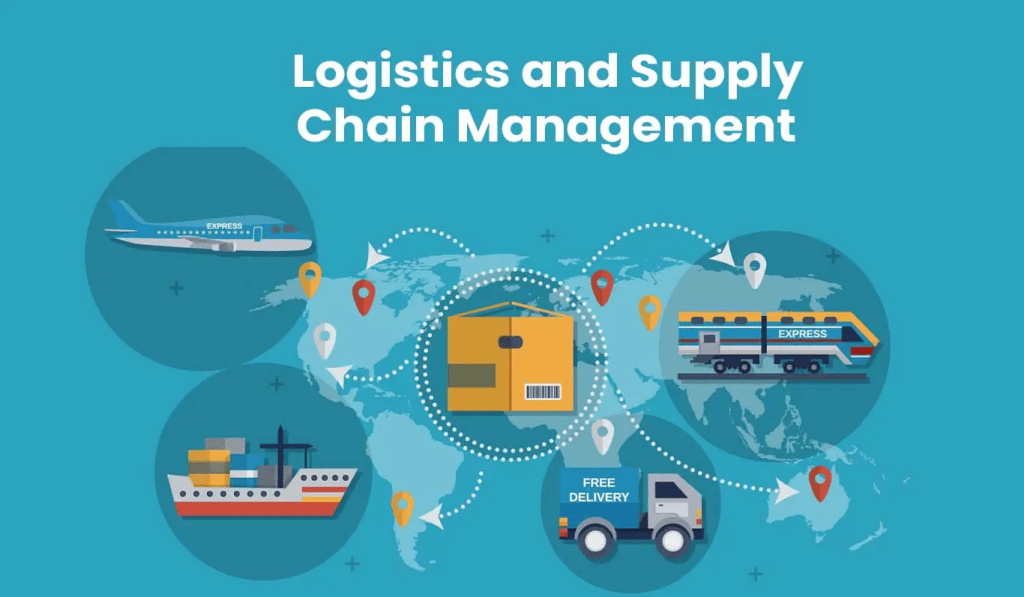
The diverse applications of AI in logistics and supply chain enhancing the productivity of the sector are:
I. Raw Material Sourcing: Strategic Decision-making with AI
1.1 Predictive Analytics for Supplier Selection
AI empowers organizations in the supply chain to make informed decisions in raw material sourcing. Predictive analytics algorithms analyze historical supplier data, market trends, and external factors to identify the most reliable and cost-effective suppliers, optimizing the procurement process and minimizing risks.
1.2 Risk Mitigation through Data Analysis
AI applications assess and predict potential risks associated with raw material sourcing. By analyzing geopolitical factors, market volatility, and supplier performance data, organizations can proactively identify and mitigate risks, ensuring a steady and secure supply chain.
II. Improving Response to Cargo Theft: Enhancing Security with AI
2.1 Predictive Analytics for Theft Prevention
AI leverages predictive analytics to analyze historical data on cargo theft incidents. By identifying patterns and vulnerabilities, organizations can predict and prevent potential thefts, improving overall security and minimizing financial losses.
2.2 Real-time Monitoring and Alerts
AI-powered monitoring systems enable real-time tracking of shipments. If anomalies or suspicious activities are detected, automated alerts are triggered, allowing quick response and intervention to prevent or mitigate cargo theft.
III. Real-time Traffic Updates and Re-routing: Navigating Efficiency with AI
3.1 Traffic Prediction and Route Optimization
AI applications provide real-time traffic updates and predict potential congestion points. This enables logistics companies to optimize routes, reduce transportation times, and enhance the efficiency of the entire supply chain by ensuring timely deliveries.
3.2 Dynamic Re-routing for Unforeseen Events
In the face of unforeseen events such as accidents or road closures, AI algorithms dynamically re-route shipments to avoid delays. This adaptability ensures that the supply chain remains resilient, even in the face of unexpected challenges.
IV. Automated Inventory Management: Precision and Efficiency
4.1 Demand Forecasting for Inventory Optimization
AI-powered demand forecasting enhances inventory management by predicting future demand accurately. This ensures optimal stock levels, minimizes excess inventory, and reduces carrying costs, contributing to increased overall efficiency.
4.2 Real-time Inventory Tracking
AI facilitates real-time tracking of inventory levels. Automated systems update inventory data instantaneously, providing organizations with accurate and up-to-date information. This eliminates the risk of stockouts and overstock situations, optimizing the entire supply chain.
V. Optimization of Warehouse Layout and Space Utilization: AI-driven Efficiency
5.1 AI-based Warehouse Design
Artificial Intelligence assists in designing optimized warehouse layouts. By analyzing factors such as product demand, order fulfillment patterns, and storage requirements, AI ensures that warehouses are organized for maximum efficiency and space utilization.
5.2 Dynamic Space Allocation
AI algorithms continuously analyze warehouse data to dynamically allocate storage space based on changing inventory needs. This adaptability optimizes storage efficiency, reduces waste, and maximizes the use of available space.
VI. Tracking and Monitoring of Shipments: Visibility and Accountability with AI
6.1 IoT Integration for Real-time Tracking
The integration of AI with the Internet of Things (IoT) enables real-time tracking and monitoring of shipments. IoT devices provide data on location, temperature, and condition, offering complete visibility into the supply chain and ensuring the accountability of each shipment.
6.2 Predictive Analytics for Shipment Delays
AI analyzes various factors affecting shipments, such as weather conditions, transportation bottlenecks, and customs delays. Predictive analytics allow organizations to anticipate and mitigate potential delays, ensuring that shipments reach their destinations on time.
VII. Bullwhip Effect Prevention: AI’s Role in Supply Chain Resilience
7.1 Data Analysis to Identify Bullwhip Effect
AI applications analyze data across the supply chain to identify patterns and fluctuations in demand. By understanding the factors contributing to the bullwhip effect, organizations can implement strategies to prevent or mitigate its impact.
7.2 Predictive Modeling for Demand Fluctuations
AI-driven predictive modeling helps organizations anticipate and respond to demand fluctuations. By accurately predicting changes in demand, businesses can adjust inventory levels, production schedules, and logistics operations, minimizing the impact of the bullwhip effect.
VIII. Challenges and Considerations in Implementing AI for Productivity
8.1 Data Security and Privacy Concerns
The increased reliance on AI in the supply chain introduces concerns about the security and privacy of sensitive data. Robust cybersecurity measures must be implemented to safeguard critical information from potential threats and unauthorized access.
8.2 Integration Complexity and Interoperability
Integrating AI technologies into existing supply chain systems may pose challenges in terms of compatibility and interoperability. A carefully planned integration process is essential to ensure smooth collaboration between AI applications and other business processes.
IX. Future Trends in AI Applications for Supply Chain Productivity
9.1 Expansion of AI in Sustainability Practices
AI will contribute to the development of sustainable supply chain practices by optimizing routes to reduce carbon emissions, minimizing waste through improved inventory management, and fostering eco-friendly manufacturing processes.
9.2 Quantum Computing for Advanced Optimization
As quantum computing advances, it holds the potential to revolutionize supply chain optimization. Quantum algorithms can solve complex optimization problems, allowing for more efficient and precise decision-making in logistics and supply chain management.
Conclusion
The application of Artificial Intelligence in the supply chain and logistics industry is a transformative journey that propels productivity, efficiency, and resilience. From raw material sourcing to preventing cargo theft, optimizing traffic management, and preventing the bullwhip effect, AI offers a spectrum of solutions. As organizations navigate the challenges of implementation, the collaborative synergy between AI and traditional processes promises a future where the supply chain is not just efficient but also adaptive, secure, and sustainable. The continuous evolution of AI in logistics and supply chain management marks an exciting era of innovation, where smart technologies pave the way for a more connected, efficient, and responsive supply chain ecosystem.


Leave a Reply