I. Introduction
Hybrid AI models stand at the forefront of technological innovation, offering a harmonious blend of rule-based systems and machine learning algorithms. This article aims to unravel the intricate components that constitute hybrid AI models, exploring the synergy between rule-based and learning-based approaches and shedding light on the transformative capabilities that arise from their integration.
II. Defining Hybrid AI Models
II.A Definition and Essence
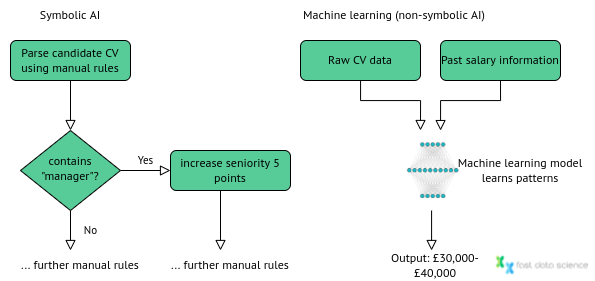
Hybrid AI models represent a convergence of rule-based systems and machine learning within a single framework. This integration aims to harness the strengths of both methodologies, marrying the explicit reasoning and structured decision-making of rule-based systems with the adaptability and pattern recognition capabilities of machine learning.
II.B Key Characteristics
- Explicit Rules: Hybrid AI models incorporate predefined rules created by domain experts. These rules serve as the foundation for explicit decision-making, ensuring a structured and interpretable approach to problem-solving.
- Machine Learning Algorithms: The learning-based aspect of hybrid AI involves the utilization of machine learning algorithms. These algorithms analyze data, identify patterns, and iteratively improve their performance over time, enabling the system to adapt to evolving scenarios.
III. Components of Hybrid AI Models
III.A Rule-Based Components
- Knowledge Base: The knowledge base is a repository of explicit rules, facts, and information provided by domain experts. It forms the basis for decision-making and guides the system’s behavior in predefined scenarios.
- Inference Engine: The inference engine is responsible for applying the rules from the knowledge base to draw conclusions or make decisions. It mimics human reasoning by following logical steps to deduce outcomes based on the input data.
- Decision-Making Module: This module interprets the output from the inference engine and translates it into actionable decisions or recommendations. It ensures that the system’s responses align with the predefined rules and the context of the given problem.
III.B Learning-Based Components
- Training Data: Learning-based components rely on training data to develop models. This data includes examples, features, and outcomes relevant to the problem at hand. The quality and representativeness of the training data significantly impact the performance of the machine learning algorithms.
- Feature Extraction: Feature extraction involves identifying relevant patterns or characteristics within the training data. These features serve as inputs to the machine learning algorithms, allowing them to learn and generalize from the provided examples.
- Machine Learning Algorithms: Various algorithms, such as decision trees, neural networks, and support vector machines, are employed within the learning-based components. These algorithms analyze patterns in the training data, make predictions, and adjust their parameters to improve accuracy.
- Model Evaluation: The effectiveness of machine learning models is assessed through rigorous evaluation using validation or testing datasets. This step ensures that the model generalizes well to new, unseen data and performs reliably in real-world scenarios.
IV. The Synergy Between Rule-Based and Learning-Based Components
IV.A Rule-Guided Learning
In a hybrid AI model, rule-based components often guide the learning process. Explicit rules provide a structured framework for initial decision-making, serving as a foundation for the machine learning algorithms to learn from. This guidance ensures that the learning process aligns with domain-specific knowledge and expertise.
IV.B Adaptability and Context Awareness
While rule-based systems excel in scenarios with clearly defined rules, they may struggle in dynamic environments. Learning-based components bring adaptability to hybrid AI models by enabling them to recognize and adapt to patterns in data that may not be explicitly covered by predefined rules. This adaptability enhances the system’s ability to operate in complex and evolving contexts.
IV.C Improved Decision-Making
The combination of rule-based and learning-based components enhances decision-making capabilities. Rule-based components provide structured reasoning for explicit scenarios, while learning-based components refine and adapt decision-making based on patterns identified in data. This synergistic approach results in more accurate and context-aware decisions.
V. Real-World Applications of Hybrid AI Models
V.A Healthcare
Hybrid AI models find applications in healthcare for diagnostics and treatment planning. Rule-based components ensure adherence to medical guidelines and ethical standards, while learning-based components analyze medical data to identify patterns associated with diseases, contributing to accurate diagnosis and personalized treatment recommendations.
V.B Finance
In the financial sector, hybrid AI models assist in risk management and fraud detection. Rule-based components establish compliance with financial regulations and industry standards, while learning-based components analyze transaction patterns to identify anomalies and potential fraudulent activities.
V.C Customer Service
Hybrid AI models enhance customer service by combining rule-based decision trees with machine learning-driven chatbots. Rule-based components handle routine queries with predefined responses, while learning-based components improve the system’s ability to understand and respond to user queries, leading to more effective and personalized interactions.
V.D Manufacturing
In manufacturing, hybrid AI models optimize production processes. Rule-based components ensure adherence to safety protocols and quality standards, while learning-based components analyze sensor data to predict equipment failures, optimize supply chain logistics, and enhance overall operational efficiency.
VI. Challenges in Developing and Implementing Hybrid AI Models
VI.A Integration Complexity
Integrating rule-based and learning-based components poses challenges in terms of system architecture and design. Achieving seamless integration requires a deep understanding of both methodologies, careful planning, and a well-defined strategy to ensure that the components complement each other effectively.
VI.B Striking the Right Balance
Finding the right balance between rule-based and learning-based components is crucial for the success of hybrid AI models. Overemphasis on rules may lead to rigidity and limited adaptability, while excessive reliance on machine learning may result in a lack of interpretability and control. Striking the right balance requires a nuanced approach that considers the specific requirements of the problem domain.
VI.C Data Quality and Quantity
The effectiveness of learning-based components in hybrid AI models heavily relies on the quality and quantity of training data. Insufficient or biased data can impact the model’s performance and generalization capabilities. Ensuring a diverse and representative dataset is a continuous challenge in the development and maintenance of hybrid AI models.
VII. Future Trends in Hybrid AI Models
VII.A Explainable AI in Hybrid Models
The demand for explainable AI continues to grow. Future trends in hybrid AI models are likely to focus on enhancing interpretability. Ensuring that both rule-based and learning-based components contribute to transparent decision-making will be crucial for gaining trust and acceptance in various domains.
VII.B Autonomous Hybrid Systems
Advancements in autonomous hybrid systems are anticipated. These systems will leverage learning-based components for adaptive decision-making and rule-based components for explicit reasoning. The goal is to create AI models that require minimal human intervention, especially in scenarios where continuous learning and adaptation are essential.
VII.C Personalized Hybrid Systems
Personalization is a key trend in AI applications. Future hybrid AI models may evolve to provide more personalized experiences by integrating learning-based components that adapt to individual user preferences, behaviors, and contexts, guided by predefined rules for ethical considerations.
VIII. Conclusion
In conclusion, the synergy between rule-based and learning-based components in hybrid AI models represents a significant leap forward in the field of artificial intelligence. The marriage of structured reasoning and adaptability holds the promise of addressing the limitations faced by standalone rule-based or learning-based systems. As technology continues to evolve, the development and deployment of hybrid AI models offer a versatile and transformative approach to solving complex problems across diverse domains. Understanding the components and the delicate balance required for their integration is crucial for unlocking the full potential of hybrid AI and ushering in a new era of intelligent and context-aware systems.


Leave a Reply