Introduction
In the fast-paced and ever-changing landscape of business, the procurement function plays a pivotal role in ensuring the seamless flow of goods and services. The integration of Artificial Intelligence (AI) into procurement processes has emerged as a transformative force, bringing forth a myriad of benefits that propel organizations into a new era of efficiency and strategic decision-making. This article explores the significant advantages of leveraging artificial intelligence in procurement, highlighting how these technologies enhance productivity, optimize costs, and foster innovation.
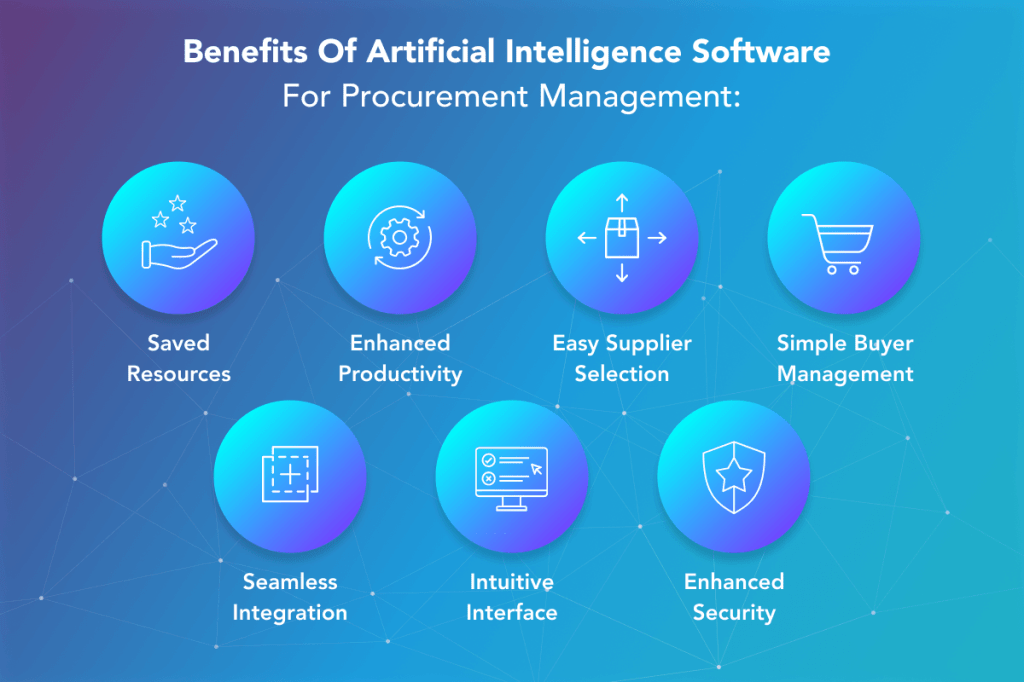
Enhanced Data Analysis and Decision-Making
Unleashing the Power of Big Data
In a data-driven world, procurement teams grapple with vast amounts of information from diverse sources. Artificial intelligence, equipped with advanced analytics capabilities, excels in processing Big Data. By swiftly analyzing massive datasets, AI enables procurement professionals to gain valuable insights, identify patterns, and make informed decisions.
Predictive Analytics for Strategic Planning
One of the standout benefits of Artificial Intelligence in procurement is its ability to deploy predictive analytics. Machine learning algorithms can analyze historical data, market trends, and supplier performance to forecast future demand accurately. This foresight empowers procurement teams to develop strategic plans, optimize inventory levels, and adapt to changing market dynamics proactively.
Streamlining Operational Efficiency
Automation of Repetitive Tasks
Artificial Intelligence, particularly Robotic Process Automation (RPA), automates mundane and repetitive tasks within the procurement workflow. Tasks such as data entry, order processing, and invoice verification can be seamlessly handled by AI-driven systems. This not only reduces the likelihood of errors but also allows human resources to focus on more strategic and value-added activities.
Accelerated Procurement Processes
The introduction of AI expedites procurement processes, leading to increased efficiency and agility. From supplier onboarding to contract management, AI streamlines operations, reduces cycle times, and ensures that critical tasks are accomplished in a timelier manner. This acceleration is vital in maintaining a competitive edge in today’s fast-paced business environment.
Strategic Supplier Management
Supplier Profiling and Performance Analysis
AI technologies revolutionize supplier management by providing comprehensive insights into supplier profiles and performance. Machine learning algorithms can assess historical supplier data, track performance metrics, and evaluate compliance with contractual obligations. This data-driven approach enables procurement teams to make strategic decisions in selecting, negotiating with, and managing suppliers.
Risk Mitigation and Compliance
Artificial Intelligence in procurement plays a crucial role in identifying and mitigating risks associated with suppliers. By analyzing external factors, financial data, and market trends, AI can predict potential risks and enable proactive risk management strategies. Additionally, AI ensures compliance with regulations and contractual agreements, reducing the likelihood of legal and financial repercussions.
Cost Optimization and Savings
Spend Analysis for Informed Decision-Making
Artificial Intelligence, through advanced algorithms, excels in analyzing spending patterns and identifying cost-saving opportunities. By categorizing and scrutinizing spending data, AI provides valuable insights into areas of overspending, redundant purchases, and opportunities for negotiation. This analytical prowess equips procurement teams with the tools to optimize spending and negotiate favorable contracts.
Invoice Processing Efficiency
Robotic Process Automation (RPA), a subset of AI, enhances the efficiency of invoice processing. RPA bots can extract data from invoices, validate it against purchase orders, and initiate the payment process with remarkable speed and accuracy. This not only reduces the burden on manual processes but also minimizes errors, leading to cost savings and improved financial management.
Revolutionizing Decision Support Systems
Data-Driven Decision-Making
AI technologies, particularly those utilizing Natural Language Processing (NLP), enable data-driven decision-making in procurement. NLP facilitates the analysis of unstructured data, such as contracts and emails, extracting valuable information that would be challenging for traditional systems to process. This enhances the quality and accuracy of decisions made by procurement professionals.
Cognitive Automation for Recommendations
Deep learning, a subset of machine learning, empowers systems with cognitive automation capabilities. In procurement, this translates to AI systems providing recommendations for decision-makers based on extensive data analysis. Whether it’s selecting suppliers, negotiating contracts, or optimizing inventory levels, AI-driven recommendations enhance the strategic decision-making process.
Future-Proofing Procurement with AI
Integration with Emerging Technologies
The benefits of Artificial Intelligence in procurement extend beyond current applications. Integration with emerging technologies such as blockchain, Internet of Things (IoT), and edge computing is on the horizon. These integrations promise to enhance transparency, traceability, and security in procurement processes, ensuring that organizations are future-proofed against evolving challenges.
Continuous Improvement Through Learning
AI systems, by their nature, continuously learn and adapt. This ability to evolve is a key factor in future-proofing procurement operations. As technologies advance and new data becomes available, AI systems can adapt to changing circumstances, ensuring that procurement strategies remain relevant and effective over time.
Overcoming Challenges in AI Adoption for Procurement
Data Quality and Integration
Successful AI implementation in procurement is contingent on the quality and integration of data. Challenges related to data accuracy, completeness, and compatibility with existing systems must be addressed to ensure the efficacy of AI-driven solutions. Organizations should invest in data quality management and integration strategies to overcome these challenges.
Change Management and Skills Development
The integration of AI in procurement necessitates a cultural shift within organizations. Resistance to change, fear of job displacement, and a lack of understanding about AI capabilities can hinder adoption. Effective change management strategies, coupled with ongoing education and skills development programs, are essential to foster a positive reception of AI technologies within procurement teams.
Conclusion
In conclusion, the integration of Artificial Intelligence into procurement processes offers a multitude of benefits, revolutionizing the way organizations approach sourcing, supplier management, and decision-making. From enhanced data analysis and operational efficiency to strategic supplier management and cost optimization, the impact of AI on procurement is profound. As organizations navigate the future, the adoption of AI becomes not just a strategic advantage but a necessity for staying competitive in a dynamic and data-driven business environment. The journey towards reaping the full benefits of AI in procurement requires proactive efforts in addressing challenges, investing in skills development, and embracing a culture of continuous improvement. With the right approach, AI becomes a powerful ally, propelling procurement teams into a new era of efficiency, innovation, and strategic prowess.


 B'yondAI
Leave a comment