Introduction
In the intricate world of manufacturing, the efficiency of production planning and scheduling is paramount for achieving optimal productivity. However, these stages are rife with challenges that can impede the seamless flow of operations. With the advent of artificial intelligence (AI), a new era has emerged where these challenges can be effectively addressed.
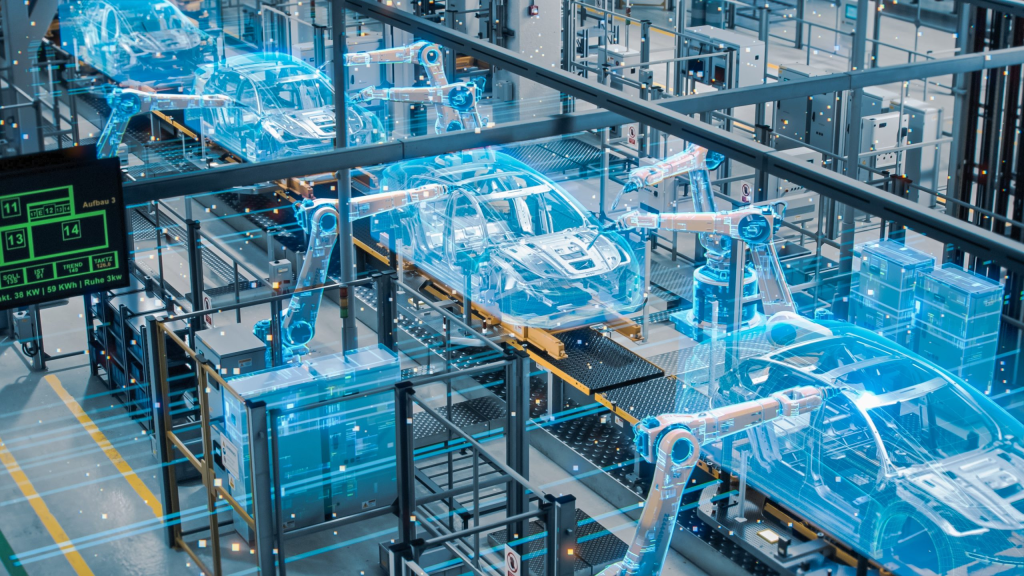
This article delves into the challenges associated with various stages of AI in production planning and scheduling and explores how AI solutions play a pivotal role in overcoming them.
1. Demand Forecasting
1.1 The Challenge
Demand forecasting is a critical aspect of production planning, and inaccuracies can lead to overstocking or stockouts. Traditional methods often fall short in predicting market trends and consumer behavior accurately. Fluctuating demands and unforeseen external factors further compound the challenge.
1.2 How AI Addresses the Challenge
AI revolutionizes demand forecasting by leveraging machine learning algorithms. These algorithms analyze vast amounts of historical data, market trends, and even external factors such as weather or economic indicators to predict future demand accurately. The self-learning capabilities of AI enable continuous refinement of forecasts, ensuring adaptability to changing market dynamics.
2. Sales and Operations Planning (S&OP)
2.1 The Challenge
Sales and Operations Planning involves aligning sales forecasts with production plans, but achieving synchronization can be challenging. Communication gaps between sales and production teams, along with a lack of real-time data, often lead to misalignment.
2.2 How AI Addresses the Challenge
AI facilitates seamless communication between sales and production teams by providing real-time data insights. Predictive analytics help in aligning sales forecasts with production capabilities, enabling better decision-making. The integration of AI in S&OP ensures a more collaborative and synchronized approach, reducing the risk of overproduction or stockouts.
3. Master Production Scheduling (MPS)
3.1 The Challenge
Creating a feasible Master Production Schedule involves considering various constraints, including resource availability, lead times, and production capacities. Traditional methods may struggle to optimize the schedule efficiently, leading to suboptimal resource utilization.
3.2 How AI Addresses the Challenge
AI-driven optimization algorithms excel in creating a feasible Master Production Schedule. These algorithms take into account multiple variables simultaneously, optimizing resource utilization, minimizing lead times, and ensuring the overall efficiency of the production process. The adaptability of AI allows for quick adjustments to unforeseen disruptions, ensuring a consistently optimized production schedule.
4. Material Requirement Planning (MRP)
4.1 The Challenge
Material Requirement Planning is essential for ensuring that the right materials are available at the right time. Challenges arise in managing complex supply chains, dealing with lead time variations, and avoiding excess inventory or shortages.
4.2 How AI Addresses the Challenge
AI enhances Material Requirement Planning by predicting material needs with greater accuracy. Machine learning algorithms analyze historical data, supplier performance, and market trends to optimize inventory levels. AI’s real-time capabilities enable dynamic adjustments to MRP, ensuring that the production line is adequately supplied while minimizing carrying costs and reducing the risk of stockouts.
5. Capacity Planning
5.1 The Challenge
Determining the optimal production capacity to meet demand while avoiding overburdening resources is a complex task. Traditional capacity planning methods may struggle to consider various constraints, leading to either underutilization or overloading of resources.
5.2 How AI Addresses the Challenge
AI-driven capacity planning uses advanced algorithms to optimize resource allocation. By considering historical performance data, current production schedules, and real-time resource availability, AI ensures that production capacity is efficiently utilized. This leads to a more balanced and optimized production process, reducing the risk of bottlenecks and enhancing overall efficiency.
6. Routing
6.1 The Challenge
Routing involves determining the most efficient path for materials and products through the production process. Traditional routing methods may not adapt well to dynamic changes in production environments, resulting in suboptimal paths and increased lead times.
6.2 How AI Addresses the Challenge
AI optimizes routing by utilizing algorithms that dynamically adapt to changes in production conditions. Machine learning algorithms analyze historical routing data, real-time production data, and external factors to identify the most efficient routes. This adaptability ensures that routing decisions are optimized for current conditions, reducing lead times and improving overall production efficiency.
Conclusion
In conclusion, the challenges embedded in production planning and scheduling stages are formidable, but the integration of AI offers a transformative solution. Through advanced algorithms, machine learning, and real-time data analysis, AI addresses the challenges associated with demand forecasting, S&OP, MPS, MRP, capacity planning, and routing. As manufacturers increasingly embrace AI in production planning, the result is not just overcoming challenges but achieving unprecedented levels of accuracy, efficiency, and adaptability. The synergy between AI and production planning is poised to redefine the manufacturing landscape, paving the way for a more agile, responsive, and optimized future.


Leave a comment