Introduction
Portfolio risk management is a critical aspect of investment strategy, aiming to maximize returns while minimizing the potential for losses. In recent years, Artificial Intelligence (AI) has emerged as a powerful tool in the realm of portfolio optimization, assisting investors in managing various types of risks more effectively.
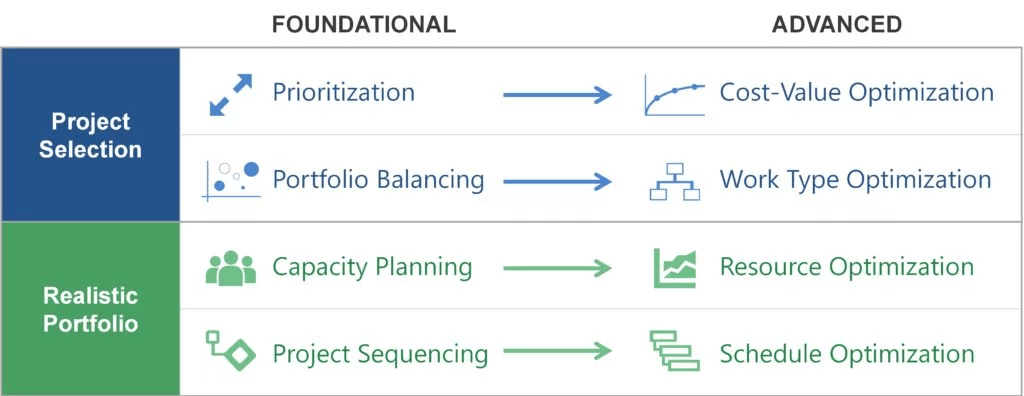
This article provides a thorough examination of how AI aids in managing different types of portfolio risks, with a specific focus on AI portfolio optimization.
I. Understanding Portfolio Risks
1.1 Market Risk
Market risk, also known as systematic risk, arises from fluctuations in financial markets. Factors such as economic conditions, interest rates, and geopolitical events impact the overall market, influencing the value of investments.
1.2 Credit Risk
Credit risk refers to the potential for loss due to the failure of a borrower to meet their financial obligations. In a portfolio context, credit risk is associated with investments in bonds, where the issuer may default on interest payments or fail to repay the principal.
1.3 Liquidity Risk
Liquidity risk stems from the inability to buy or sell assets quickly without affecting their prices. In illiquid markets, investors may face challenges in executing trades, leading to potential losses.
1.4 Operational Risk
Operational risk arises from internal processes, systems, and human errors. It includes risks associated with technology failures, fraud, and inadequate internal controls.
1.5 Currency Risk
Currency risk, or exchange rate risk, occurs when investments are denominated in a different currency. Fluctuations in exchange rates can impact the value of these investments.
II. Role of AI in Portfolio Risk Management
2.1 Automation of Risk Assessment
AI automates the process of risk assessment by analyzing vast amounts of data to identify potential risks. Machine learning algorithms can recognize patterns and correlations, providing a more comprehensive understanding of the various factors contributing to risk.
2.2 Predictive Analytics for Market Risk
AI utilizes predictive analytics to assess market risk. By analyzing historical market data, AI algorithms can identify trends and patterns, enabling investors to anticipate potential market movements and make informed decisions.
2.3 Credit Risk Modeling
In managing credit risk, AI excels in building sophisticated models that assess the creditworthiness of issuers. By analyzing financial statements, credit ratings, and market trends, AI can provide more accurate predictions of credit risk.
2.4 Dynamic Liquidity Management
AI contributes to dynamic liquidity management by analyzing real-time market data and assessing liquidity conditions. This allows portfolio managers to adjust their strategies based on the current liquidity landscape.
2.5 Operational Risk Mitigation
AI aids in mitigating operational risk by implementing advanced monitoring systems. These systems can detect anomalies and potential risks in internal processes, minimizing the likelihood of operational failures.
2.6 Currency Risk Hedging
In managing currency risk, AI facilitates the development of hedging strategies. By analyzing macroeconomic indicators and currency trends, AI can suggest appropriate hedging mechanisms to protect against adverse currency movements.
III. AI Portfolio Optimization Techniques
3.1 Mean-Variance Optimization
Mean-variance optimization is a classic portfolio optimization technique that aims to maximize returns for a given level of risk. AI algorithms enhance this approach by incorporating more sophisticated risk models and efficiently handling large datasets.
3.2 Black-Litterman Model
The Black-Litterman model combines market equilibrium with investor views to optimize portfolios. AI improves this model by incorporating machine learning algorithms to update views dynamically based on changing market conditions.
3.3 Risk Parity
Risk parity is a strategy that allocates capital based on the risk contribution of each asset rather than its market value. AI algorithms assist in dynamically adjusting risk parity portfolios by continuously analyzing risk factors and market conditions.
3.4 Factor-Based Investing
AI contributes to factor-based investing by identifying and analyzing various factors that influence asset prices. Machine learning algorithms can identify factors that are most relevant in different market conditions, improving the effectiveness of factor-based strategies.
IV. Case Studies: Successful Applications of AI in Portfolio Risk Management
4.1 Bridgewater Associates
Bridgewater Associates, one of the world’s largest hedge funds, utilizes AI algorithms for risk parity strategies and portfolio optimization. The firm’s success is attributed to its ability to dynamically adjust portfolio allocations based on changing market conditions.
4.2 Two Sigma Investments
Two Sigma Investments leverages AI and machine learning for quantitative analysis and risk management. The firm’s systematic approach involves continuously refining models to adapt to evolving market dynamics.
V. Challenges in AI Portfolio Optimization
5.1 Overfitting and Data Biases
Overfitting, where a model performs well on historical data but fails to generalize to new data, is a common challenge in AI portfolio optimization. Addressing biases in historical data is crucial to ensure the model’s robustness.
5.2 Lack of Transparency
The lack of transparency in AI models can pose challenges, especially when it comes to explaining the rationale behind specific portfolio optimization decisions. Investors and regulators may be hesitant without a clear understanding of the model’s decision-making process.
5.3 Dynamic Market Conditions
Dynamic market conditions, characterized by rapid changes and uncertainties, can challenge AI models. Ensuring that AI algorithms can adapt quickly to evolving market dynamics is essential for effective portfolio optimization.
5.4 Computational Complexity
Some advanced AI portfolio optimization techniques involve complex mathematical models that require significant computational power. Addressing computational complexity is crucial to ensure efficient and timely decision-making.
VI. Future Trends in AI Portfolio Optimization
6.1 Quantum Computing
The integration of quantum computing is expected to revolutionize AI portfolio optimization. Quantum computers can process complex algorithms at speeds unimaginable with classical computers, opening new possibilities for more sophisticated optimization models.
6.2 Explainable AI
As the demand for transparency grows, the development of explainable AI models is anticipated. Providing clear explanations for portfolio optimization decisions will be crucial for gaining trust from investors and regulators.
6.3 Hybrid Approaches
Hybrid approaches that combine the strengths of AI with human judgment are likely to become more prevalent. Integrating AI insights with human expertise can lead to more well-rounded and informed portfolio optimization strategies.
VII. Conclusion
In conclusion, AI plays a pivotal role in managing different types of portfolio risks through advanced risk assessment, predictive analytics, and portfolio optimization techniques. From addressing market risk to dynamically managing liquidity and credit risk, AI offers a suite of tools to enhance the risk management process. The evolution of AI portfolio optimization techniques, such as mean-variance optimization, Black-Litterman models, risk parity, and factor-based investing, demonstrates the versatility and adaptability of AI in addressing various aspects of portfolio risk. While challenges such as overfitting, lack of transparency, and dynamic market conditions persist, ongoing advancements, including the integration of quantum computing and explainable AI, signal a promising future for AI in portfolio risk management. Investors and portfolio managers stand to benefit from embracing these technologies to optimize their portfolios in an ever-changing financial landscape.


Leave a Reply