Transformer models have emerged as a cornerstone of modern artificial intelligence, driving significant advancements in natural language processing, computer vision, and other AI applications. In this comprehensive guide, we’ll explore the recent trends shaping the field of transformer model development, from architecture innovations to application breakthroughs.
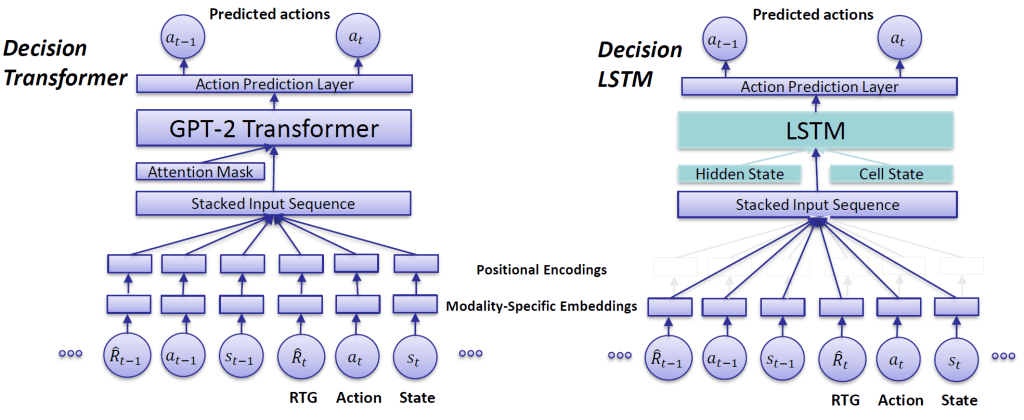
Understanding Transformer Models
What are Transformer Models?
Transformer models are a class of neural network architectures originally introduced in the landmark paper “Attention is All You Need” by Vaswani et al. They revolutionized the field of natural language processing (NLP) by introducing the self-attention mechanism, enabling models to capture long-range dependencies in sequential data more effectively.
Importance of Transformer Models
Transformer models have become ubiquitous in AI research and industry applications due to their ability to handle sequential data with unparalleled performance. They have powered breakthroughs in machine translation, text summarization, sentiment analysis, and more, making them indispensable tools for various tasks.
Recent Trends in Transformer Model Development
1. Architecture Innovations
Recent years have witnessed a surge in architecture innovations aimed at improving the efficiency and effectiveness of transformer models. Variants such as BERT (Bidirectional Encoder Representations from Transformers), GPT (Generative Pre-trained Transformer), and T5 (Text-to-Text Transfer Transformer) have pushed the boundaries of what transformer models can achieve.
2. Model Scaling
A prominent trend in transformer model development is the relentless pursuit of larger and more powerful models. Researchers are continually scaling up model sizes, leading to breakthroughs in performance on benchmark tasks. However, this trend also poses challenges in terms of computational resources and energy consumption.
3. Efficiency Improvements
Efficiency has become a critical focus area in transformer model development, driven by the need to deploy models in resource-constrained environments such as mobile devices and edge devices. Techniques such as model pruning, quantization, and knowledge distillation are being explored to reduce model size and inference latency without sacrificing performance.
4. Multimodal Transformers
Multimodal transformers, capable of processing and integrating information from multiple modalities such as text, images, and audio, have gained traction in recent years. These models enable a wide range of applications, including image captioning, visual question answering, and multimodal sentiment analysis.
5. Domain-Specific Transformers
Another notable trend is the development of domain-specific transformers tailored to specific tasks and industries. For example, models fine-tuned on biomedical text have shown promising results in medical natural language understanding, while transformers optimized for code generation have facilitated advancements in programming language processing.
6. Continual Learning
Continual learning, or the ability of models to learn continuously from streaming data without forgetting previous knowledge, has emerged as a crucial research direction in transformer model development. Techniques such as incremental training and meta-learning are being explored to enable models to adapt to changing environments and tasks over time.
Implications and Future Outlook
The recent trends in transformer model development have significant implications for AI research, industry applications, and society as a whole. As transformer models continue to evolve and scale, we can expect to see further breakthroughs in AI-driven technologies, including more robust natural language understanding, more accurate computer vision systems, and more sophisticated AI assistants.
However, these advancements also raise important considerations regarding ethics, fairness, and transparency in AI. As transformer models become increasingly powerful and pervasive, ensuring responsible AI development and deployment will be paramount to address concerns related to bias, privacy, and societal impact.
In conclusion, the field of transformer model development is evolving rapidly, driven by ongoing research, technological innovations, and real-world applications. By staying abreast of the latest trends and developments, researchers, practitioners, and industry stakeholders can harness the full potential of transformer models to address complex challenges and unlock new opportunities in AI and beyond.


 B'yondAI
Leave a comment