In recent years, artificial intelligence (AI) has emerged as a transformative force in the healthcare industry, offering innovative solutions to various challenges. From diagnostic assistance to personalized treatment plans, AI technologies are revolutionizing healthcare delivery, improving patient outcomes, and streamlining operations for healthcare providers.
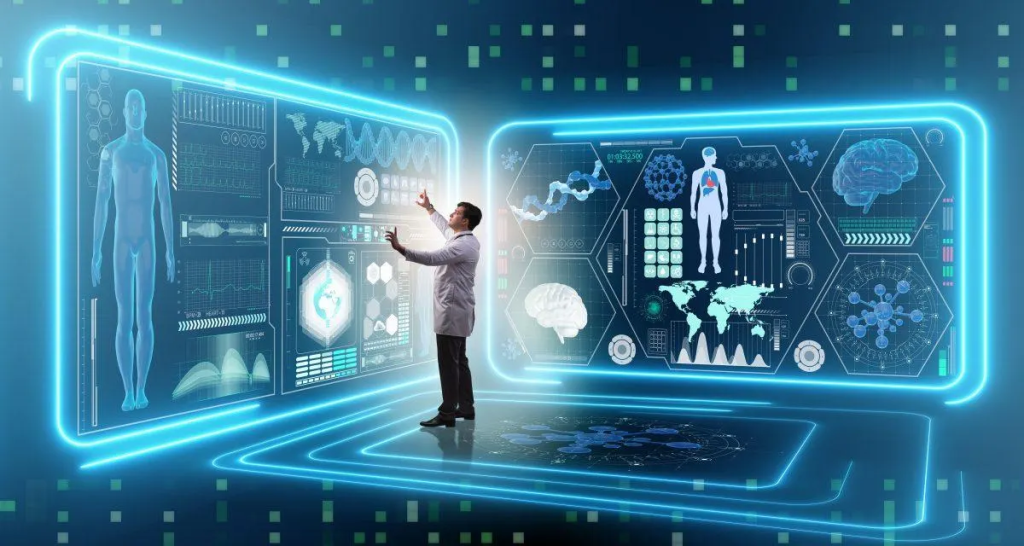
In this article, we delve into the latest developments and use cases of AI in healthcare, exploring how these advancements are reshaping the landscape of medicine.
Understanding AI in Healthcare
Artificial intelligence encompasses a range of technologies that enable machines to perform tasks that typically require human intelligence. In healthcare, AI algorithms analyze vast amounts of data, including medical images, patient records, and genomic information, to extract valuable insights and support clinical decision-making.
The Role of AI in Diagnosis and Disease Management
One of the most significant applications of AI in healthcare is in diagnosis and disease management. Machine learning algorithms can analyze medical imaging data, such as X-rays, MRIs, and CT scans, to detect abnormalities and assist radiologists in interpreting images more accurately and efficiently. Moreover, AI-powered diagnostic tools can identify patterns in patient data to aid in the early detection of diseases, including cancer, cardiovascular conditions, and neurological disorders.
Personalized Treatment Planning
AI algorithms can analyze patient data, including genetic information and medical history, to develop personalized treatment plans tailored to individual patients. By considering factors such as genetic predispositions, treatment response rates, and potential side effects, AI can help clinicians make more informed decisions about treatment options, leading to better outcomes and reduced healthcare costs.
Predictive Analytics and Preventive Care
Another critical application of AI in healthcare is predictive analytics, which involves using machine learning models to forecast health outcomes and identify patients at risk of developing certain conditions. By analyzing electronic health records (EHRs), wearable device data, and other sources of health information, AI algorithms can predict the likelihood of future health events, such as hospital readmissions, medication non-adherence, and disease exacerbations. This enables healthcare providers to intervene proactively and implement preventive measures to mitigate risks and improve patient outcomes.
Latest Developments in AI Use Cases
Advanced Medical Imaging Technologies
Recent advancements in AI have led to the development of more sophisticated medical imaging technologies, such as AI-enhanced ultrasound and MRI systems. These systems leverage deep learning algorithms to improve image quality, reduce scan times, and enhance diagnostic accuracy, enabling clinicians to visualize anatomical structures and detect abnormalities with greater precision.
Virtual Health Assistants and Chatbots
Virtual health assistants and chatbots powered by AI are becoming increasingly prevalent in healthcare settings, providing patients with access to personalized health information, appointment scheduling, medication reminders, and symptom assessment tools. These AI-driven applications can improve patient engagement, streamline administrative tasks, and deliver timely healthcare support, particularly in remote or underserved communities.
Drug Discovery and Development
AI is revolutionizing the drug discovery and development process, accelerating the identification of potential therapeutic compounds and optimizing drug design. Machine learning algorithms can analyze vast datasets, including genomic data, protein structures, and chemical properties, to identify novel drug targets and predict the efficacy and safety of candidate compounds. This enables pharmaceutical companies to expedite the development of new treatments for a wide range of diseases, from cancer to infectious diseases.
Remote Patient Monitoring and Telemedicine
With the growing emphasis on remote healthcare delivery, AI-powered remote patient monitoring solutions are gaining traction, enabling healthcare providers to monitor patients’ health status remotely and intervene as needed. These solutions leverage wearable devices, IoT sensors, and AI algorithms to collect and analyze real-time health data, empowering patients to manage chronic conditions more effectively and reducing the need for in-person visits.
Conclusion
The latest developments in AI use cases in healthcare are driving significant advancements in diagnosis, treatment, and patient care. From advanced medical imaging technologies to virtual health assistants and drug discovery platforms, AI is transforming the way healthcare is delivered and revolutionizing the industry. As AI continues to evolve, its impact on healthcare is poised to grow, offering new opportunities to improve patient outcomes, enhance operational efficiency, and advance medical research.
In conclusion, the integration of AI technologies holds immense promise for the future of healthcare, offering innovative solutions to some of the most pressing challenges facing the industry. By harnessing the power of AI, healthcare providers can deliver more personalized, efficient, and effective care, ultimately leading to better health outcomes for patients worldwide.


Leave a comment